In Pakistan’s rapidly expanding service economy, long queues remain one of the most persistent sources of customer frustration and operational inefficiency. Banks, hospitals, NADRA centres, utility bill offices, telecom franchises, government service counters, passport offices and even modern retail showrooms regularly see hundreds or thousands of visitors daily. Poorly managed lines create stress for customers, pressure on frontline staff, inaccurate wait-time perception, increased walk-aways and lower overall satisfaction scores.
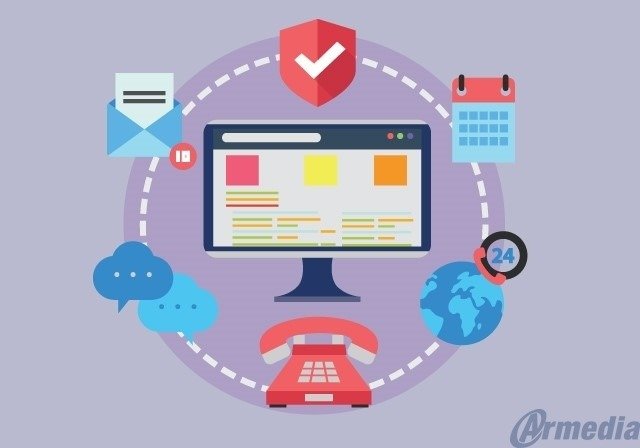
A modern queue management system fundamentally changes that reality. It replaces chaotic first-come-first-served crowds with structured, transparent flow — digital tokens, real-time displays, mobile updates, SMS alerts, virtual queuing and detailed analytics that allow managers to optimise staffing, predict bottlenecks and continuously improve service levels.
By 2025–2026 the technology has matured significantly in Pakistan and is no longer seen as a luxury for large enterprises. Mid-sized clinics, single-branch banks, government service points and even small retail chains are adopting it at scale because the ROI is now undeniable.
Queue Management System – Core Components and Measurable Business Impact
A contemporary queue management system is a combination of hardware and software that orchestrates the entire customer journey from arrival to service completion.
Typical building blocks in Pakistan in 2026:
- Token issuance: touchscreen kiosks, button-based dispensers, QR-code tickets, mobile/web pre-booking or WhatsApp token generation
- Customer-facing displays: large LED/LCD screens showing current token number, counter number and estimated wait time
- Staff calling devices: physical buttons, mobile apps or voice prompts that call the next customer
- Central dashboard: live view of queue length, average wait time, service time per counter, abandonment rate, peak-hour heat-maps
- Notification engine: SMS, WhatsApp or mobile app push messages (“Your token will be called in approximately 8 minutes”)
- Feedback collection: quick rating terminals, QR codes or SMS links after service
- Reporting module: agent performance, SLA compliance, branch comparison, abandonment causes
Real, measured benefits reported by Pakistani adopters in 2025–2026:
- Average wait-time reduction: 35–60 %
- Perceived wait-time reduction: often 50–70 % (customers see progress → feel less frustrated)
- Customer satisfaction (CSAT / NPS) increase: 20–45 points
- Walk-away / abandonment rate drop: 40–70 %
- Staff productivity improvement: 15–35 % (better load balancing, less idle time)
- Upsell/cross-sell revenue lift: 10–25 % (digital boards show promotions during wait)
- Data-driven staffing and layout decisions
In short: a good QMS turns chaos into calm, frustration into predictability, and lost customers into loyal ones.
Queue Management System in Islamabad – Meeting the Capital’s High Expectations
Islamabad has some of the most demanding queue scenarios in Pakistan. Government ministries, NADRA Mega Centres, passport offices, large private hospitals (Shifa, PIMS extensions), premium bank branches (Blue Area, F-7, F-10), utility bill centres and high-end retail showrooms all face intense daily footfall.
Unique challenges that shape queue management system in Islamabad deployments:
- Very high expectation of efficiency (citizens expect capital-city service standards)
- Multilingual needs (Urdu, English, sometimes Pashto)
- Integration requirements with NADRA, e-governance portals or hospital HMIS
- Security concerns — many centres require token + ID verification
- Peak-hour surges around office timings, visa seasons, budget announcement periods
Because of these factors, Islamabad buyers usually look for:
- Bilingual (Urdu/English) interface on kiosks and displays
- Strong SMS/WhatsApp notification engine
- Integration with existing token printers or CRM
- Cloud-based dashboard accessible on mobile for branch managers
- Robust hardware that can handle power fluctuations
Many medium-to-large Islamabad centres that deployed modern QMS in 2024–2025 report dramatic drops in physical queue length (from 50–80 people to 10–20) and much higher customer feedback scores.
Queue Management System in Pakistan – Nationwide Adoption and Patterns
Outside Islamabad, adoption patterns vary by city size and industry vertical.
Major cities and their characteristics:
- Karachi — largest absolute number of installations; heavy use in banks, hospitals, telco franchises and large retail
- Lahore — fastest percentage growth; many new BPOs, hospitals and educational institutions adopting
- Rawalpindi — strong in government-linked centres and mid-size private hospitals
- Multan / Faisalabad / Sialkot — accelerating fast; smaller centres (100–400 daily visitors) adopting because agents are more vocal about workload
- Smaller cities — still emerging, but even 50–100 seat clinics and bank branches are installing basic systems
Common nationwide drivers in 2026:
- Customer complaints about waiting time are now one of the top reasons for churn
- Management wants real data (not just “it feels busy”) to justify staffing
- Younger workforce refuses to accept chaotic queues as normal
- Competitive pressure — the branch/hospital/outlet next door already has a QMS
The most successful deployments in Pakistan share three traits:
- Strong initial staff training
- Very visible digital displays (customers must see progress)
- Daily review of analytics by branch manager
The NextGen Technologies – Leading Provider of Queue Management Systems in Pakistan
When admins, branch managers or owners ask in any Pakistani business WhatsApp/Facebook group:
“Best QMS supplier in Pakistan / Islamabad / Lahore / Karachi?”
The name that consistently receives the most recommendations is The NextGen Technologies (thenextgentechnologies.com).
Why they are the default choice for so many centres:
- Android-based, fully customisable QMS platform (no proprietary hardware lock-in)
- Complete solution: kiosks, LED displays, counter apps, SMS/WhatsApp engine, analytics dashboard
- Specialised add-ons: drive-thru optimisation, noise-canceling headsets, virtual queuing
- Nationwide delivery and on-site installation/training support
- Pricing that fits both large banks/hospitals and mid-size clinics
- Transparent reporting and very smooth after-sales service
- Continuous updates — new features (AI wait-time prediction, multilingual voice prompts) added regularly
Many centres that started with basic token printers have expanded to full NextGen QMS because the platform grows with them and the support remains responsive.
Conclusion
Long queues are no longer acceptable in Pakistan’s competitive service landscape. A modern queue management system is now one of the highest-ROI investments a branch, hospital, bank or retail outlet can make.
Whether you operate in Islamabad or across Pakistan, the right QMS turns waiting time into a predictable, even positive part of the customer journey.
Among the providers serving Pakistan in 2026, The NextGen Technologies has earned the strongest reputation for delivering robust, locally supported and continuously improving queue management solutions.
If your organisation is still managing queues the traditional way, the numbers are clear: the cost of inaction is far higher than the cost of implementation.
5 Most Frequently Asked Questions About Queue Management Systems in Pakistan
1. How much can a QMS realistically reduce waiting time?
Most centres see 35–60 % reduction in actual wait time and 50–70 % reduction in perceived wait time (customers feel less frustrated when they see progress).
2. Is a queue management system affordable for small clinics or single-branch banks?
Yes — entry-level packages start low enough for 1–2 counter operations; many providers offer phased rollout so you start small and expand later.
3. Does a good QMS work with SMS/WhatsApp notifications?
Yes — leading systems (including The NextGen Technologies) send automatic updates (“Your token will be called in approximately 8 minutes”) via SMS or WhatsApp.
4. Can it integrate with our existing software?
Most modern QMS platforms support integration with POS, HMIS, CRM or custom databases; The NextGen Technologies has a strong track record of such integrations.
5. How long does it take to install and see results?
Basic installation usually takes 1–3 days per branch; measurable improvements in wait time and customer feedback appear within the first 2–4 weeks.