Concrete stands as one of civilization’s most enduring building materials, with structures lasting centuries when properly constructed. For Santa Ana property owners, concrete applications extend far beyond simple sidewalks—from decorative patios transforming outdoor living spaces to structural foundations supporting entire buildings, from commercial parking structures accommodating thousands of vehicles to custom pool decks creating backyard retreats. Understanding professional concrete services helps you make informed decisions about installations that will serve your property for generations while adding significant functional and aesthetic value.
Unlike asphalt’s flexibility or wood’s warmth, concrete offers unmatched durability and versatility. Modern concrete technology produces surfaces ranging from utilitarian gray slabs to intricately colored and textured masterpieces mimicking natural stone, brick, or tile. This material withstands Orange County’s climate extremes, requires minimal maintenance compared to alternatives, and provides the structural strength essential for load-bearing applications. Whether you’re planning residential improvements or managing commercial property development, professional concrete contractors transform visions into permanent installations that enhance property value for decades.
The Versatility of Modern Concrete Applications
Residential concrete extends far beyond basic driveways and walkways. Decorative concrete patios create outdoor living spaces rivaling interior rooms in comfort and style. Stamped concrete mimics slate, flagstone, or pavers at fractions of natural material costs. Stained concrete introduces rich earth tones or vibrant colors impossible with traditional materials. Polished concrete floors bring contemporary industrial aesthetics to modern homes while providing durable, easy-maintenance surfaces ideal for Southern California indoor-outdoor living.
Commercial applications demand concrete’s superior load-bearing capacity and longevity. Parking structures must support concentrated vehicle loads while resisting years of traffic wear and weather exposure. Loading docks accommodate heavy equipment and constant truck traffic that would destroy lesser materials. Warehouse floors need flat, level surfaces supporting forklifts and pallet jacks while withstanding decades of industrial use. These demanding applications require expertise in structural design, proper reinforcement, and specialized concrete mixes that only professional contractors provide.
Concrete hardscaping transforms landscapes through retaining walls, decorative borders, and architectural features. Retaining walls solve slope stability issues while creating terraced yards and usable outdoor spaces. Concrete planters, fire pit surrounds, and outdoor kitchen islands blend functionality with aesthetics. These installations require understanding of structural principles, drainage management, and finishing techniques that create cohesive designs integrating seamlessly with overall landscape visions.
Foundation work represents concrete’s most critical application. Slab foundations, stem walls, and grade beams transfer building loads safely to supporting soils. Proper foundation construction requires soil analysis, appropriate reinforcement design, and meticulous attention to specifications. Foundation failures cause catastrophic structural problems costing tens of thousands to remediate. This high-stakes application demands experienced contractors who understand engineering principles and never compromise on materials or procedures regardless of budget pressures.
Understanding Concrete Materials and Mix Design
Portland cement concrete consists of cement, water, and aggregates—sand and various-sized stones—in carefully proportioned mixtures. Cement chemically reacts with water in a process called hydration, creating calcium silicate hydrate crystals that bind aggregates into solid masses. This chemical transformation continues for months, with concrete gaining strength progressively as hydration proceeds. Understanding this curing process proves essential for protecting fresh concrete and achieving specified performance characteristics.
Mix design determines concrete performance across multiple dimensions. Compressive strength—measured in pounds per square inch (PSI)—indicates load-bearing capacity. Residential applications typically specify 2,500-3,000 PSI while commercial and structural work may require 4,000-5,000 PSI or higher. Higher strength concrete costs more but provides superior durability and load capacity for demanding applications. Professional contractors specify appropriate strengths for each application rather than using one-size-fits-all approaches that waste money or compromise performance.
Admixtures modify concrete properties for specific applications or conditions. Air-entraining agents create microscopic bubbles improving freeze-thaw resistance in climates with winter freezing. Water reducers allow lower water content while maintaining workability, producing stronger, more durable concrete. Accelerators speed setting when cold weather slows hydration. Retarders extend working time during hot weather or for large pours requiring extended placement periods. Proper admixture selection requires experience with local conditions and specific project requirements.
Reinforcement provides tensile strength that plain concrete lacks. Steel rebar placed strategically throughout concrete resists tension forces from loads, settlement, or thermal movement. Wire mesh reinforces slabs against cracking from shrinkage or minor ground movement. Fiber reinforcement adds crack resistance to surfaces subject to surface stresses. An experienced Concrete Contractor Santa Ana designs reinforcement patterns appropriate to each application, ensuring concrete performs reliably under expected service conditions.
The Professional Concrete Installation Process
Site preparation determines project success before any concrete arrives. Contractors evaluate grades ensuring proper drainage away from structures. They excavate to specified depths, removing organic soils and unsuitable materials. Subgrade compaction creates stable platforms preventing settlement that causes cracking. For slabs, aggregate base installation provides uniform support while facilitating drainage beneath concrete. These preparatory steps consume significant time but prove absolutely essential for long-term performance.
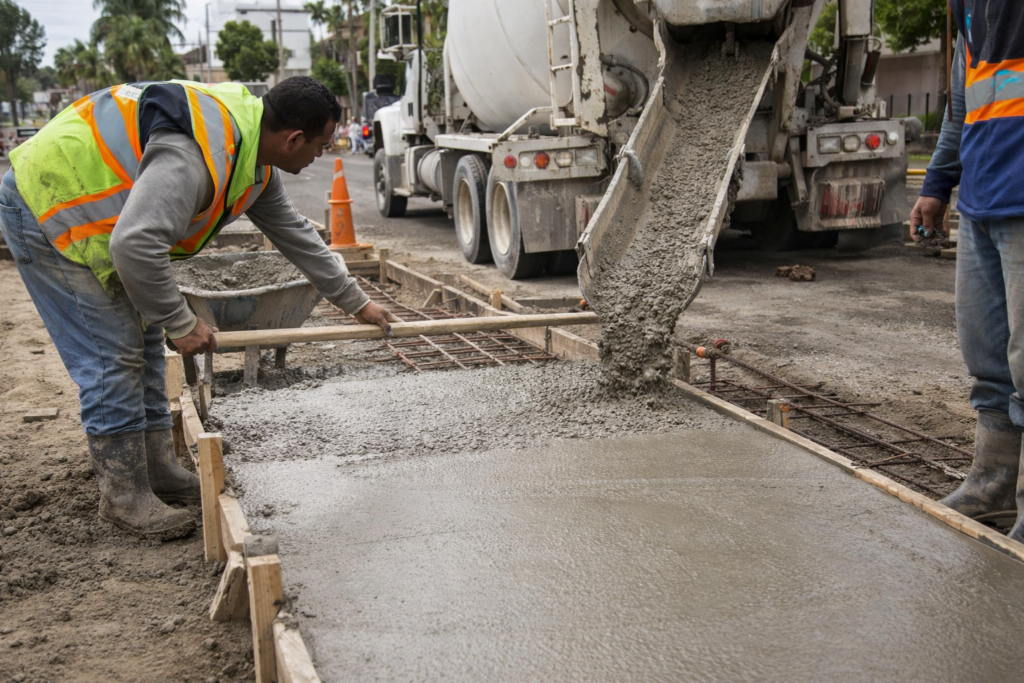
Formwork creates concrete’s final shape and contains material during placement. Residential projects use wood forms secured with stakes and bracing. Commercial work may employ steel forms providing greater rigidity and reusability. Forms must be level, plumb, and adequately braced to resist concrete’s substantial fluid pressures during placement. Poor formwork creates misaligned, bulging, or collapsed sections requiring expensive demolition and replacement. Professional contractors invest time ensuring forms meet specifications before concrete arrives.
Reinforcement placement follows engineering specifications regarding bar sizes, spacing, and positioning. Rebar must maintain proper concrete cover—the distance between steel and concrete surfaces—providing corrosion protection while ensuring adequate bond. Wire mesh gets positioned mid-slab thickness using chairs or supports. Contractors verify all reinforcement locations before concrete placement begins—corrections after pouring prove impossible without starting over completely.
Concrete placement requires coordination and speed. Ready-mix trucks discharge concrete that crews immediately spread, consolidate, and finish. Vibration eliminates air pockets ensuring complete filling around reinforcement and against forms. Screeding levels surfaces to proper elevations. Floating smooths surfaces and brings cement paste to the top. Finishing creates specified surface textures from smooth troweled to decorative stamped or exposed aggregate. Each step occurs within narrow time windows as concrete begins setting—professional crews work efficiently executing multiple simultaneous tasks flawlessly.
Decorative Concrete: Beauty Meets Durability
Stamped concrete replicates natural materials through texturized mats pressed into fresh concrete before final setting. Patterns mimic flagstone, slate, brick, cobblestone, wood planks, or countless other designs. After curing, surfaces receive color treatments creating realistic appearances rivaling natural materials. Stamped concrete costs substantially less than materials it mimics while requiring minimal maintenance and providing superior durability. This versatility makes stamped concrete popular for patios, walkways, pool decks, and driveways seeking distinctive appearances.
Colored concrete achieves rich hues through integral pigments mixed throughout concrete or topical stains applied after curing. Integral color provides consistent coloration unaffected by surface wear—ideal for high-traffic areas. Acid stains create variegated, translucent colors with natural variation and character impossible through other methods. Water-based stains offer broader color palettes with more uniform appearances. Multiple techniques can combine creating layered, complex color schemes limited only by imagination and artistic vision.
Exposed aggregate finishes reveal decorative stones within concrete by removing surface cement paste before complete hardening. This technique creates textured, slip-resistant surfaces showcasing carefully selected aggregates. Pea gravel, river rock, crushed glass, or semi-precious stones become decorative elements rather than hidden structural components. Exposed aggregate provides excellent traction for pool decks and exterior applications while creating distinctive aesthetics that traditional smooth finishes cannot achieve.
Polished concrete transforms utilitarian material into sophisticated flooring through multi-step grinding and polishing processes. Diamond grinding tools progressively refine surfaces, exposing aggregate and creating glass-smooth finishes. Densifying treatments strengthen surfaces and enhance shine. Polished concrete eliminates floor covering needs while providing extremely durable, low-maintenance surfaces ideal for modern residential and commercial interiors. Santa Ana’s growing popularity of industrial-chic design aesthetics makes polished concrete increasingly desirable for both homes and businesses.
Structural Concrete for Commercial Applications
Commercial concrete work demands engineering expertise beyond residential capabilities. Structural calculations determine required concrete strengths, reinforcement patterns, and construction sequences. Parking structures must support vehicle loads while accounting for long-term exposure to water, deicing chemicals, and constant traffic abrasion. Industrial floors need specifications addressing specific equipment loads, chemical exposures, and abrasion resistance for particular operations. These complex requirements necessitate contractors with engineering resources and commercial construction experience.
Load-bearing capacity calculations drive commercial concrete design. Columns support building weights, transferring loads to foundations and ultimately to supporting soils. Beams span between supports, carrying floor loads to columns. Slabs distribute loads across their surfaces while resisting bending from weights they support. Each element requires proper sizing, reinforcement, and concrete strength to function safely within overall structural systems. Professional contractors coordinate with structural engineers ensuring installations meet design specifications and building code requirements.
Concrete pumping facilitates placement in difficult locations or large pours. Truck-mounted pumps extend booms 100+ feet vertically or horizontally, delivering concrete precisely where needed. Line pumps push concrete through hoses to locations vehicles cannot access. High-volume pumps place hundreds of cubic yards hourly for massive pours requiring continuous placement to prevent cold joints. These specialized capabilities prove essential for multi-story construction, interior renovations, or projects with limited access for traditional ready-mix truck discharge.
Post-tensioning creates high-strength slabs and beams using steel cables tensioned after concrete cures. This technique allows longer spans between supports, thinner slabs carrying identical loads, and superior crack control compared to conventional reinforcement. Parking structures, commercial buildings, and other applications benefit from post-tensioning’s structural efficiency and economy. However, this sophisticated technology requires specialized contractors with training and equipment that general concrete contractors may not possess.
Climate Considerations for Santa Ana Concrete
Southern California’s climate presents specific concrete challenges requiring local expertise. Hot, dry conditions accelerate moisture evaporation from fresh concrete, potentially causing plastic shrinkage cracking before surfaces finish. Contractors combat this through evaporation retarders, frequent water misting, and scheduling pours during cooler morning hours. Understanding these environmental factors separates successful installations from problematic ones exhibiting premature cracking or surface defects.
Thermal expansion and contraction from Santa Ana’s temperature variations necessitate proper joint spacing and design. Control joints create intentional weak points where cracking occurs in straight lines rather than random patterns. Expansion joints accommodate thermal movement preventing stress buildup that causes uncontrolled cracking. Joint spacing depends on slab thickness and expected temperature ranges—professional contractors calculate appropriate spacing rather than using arbitrary patterns that may prove inadequate.
Curing procedures prove especially critical in warm, dry climates. Concrete must retain adequate moisture for hydration to proceed properly. Water curing involves keeping surfaces continuously wet for 7+ days. Curing compounds seal surfaces, retaining internal moisture. Plastic sheeting prevents evaporation while maintaining humidity around concrete. Without proper curing, concrete develops reduced strength, increased permeability, and greater susceptibility to cracking and scaling. Quality contractors never skip this essential step regardless of schedule pressures.
UV exposure from intense California sunshine affects decorative concrete finishes over time. Sealers protect colored and stamped surfaces from fading while providing water and stain resistance. Quality sealers require reapplication every 2-4 years depending on traffic and exposure. This maintenance preserves appearance and extends concrete life substantially. Professional contractors specify appropriate sealers during installation and educate customers about maintenance requirements ensuring long-term satisfaction.
Investment Considerations and Lifecycle Costs
Concrete costs vary widely based on application complexity, finish specifications, site conditions, and current material prices. Basic gray concrete slabs run $4-8 per square foot installed. Stamped and colored decorative concrete ranges $8-18 per square foot depending on pattern complexity and color techniques. Polished concrete flooring costs $3-12 per square foot including preparation and multi-step processing. Structural work requires project-specific estimates accounting for engineering, reinforcement, and construction complexity.
Lifecycle costs favor concrete over many alternatives despite higher initial installation expenses. Properly installed concrete lasts 30-50+ years with minimal maintenance beyond periodic cleaning and sealing. Wood decks require regular staining and eventual replacement after 15-20 years. Pavers settle and require releveling every decade or so. Natural stone demands sealing and repair of cracked pieces. When comparing total costs over decades rather than initial installation alone, concrete often provides superior value despite premium upfront pricing.
Maintenance requirements remain remarkably modest for concrete surfaces. Sweep or pressure wash periodically to remove dirt and debris. Reseal decorative finishes every 2-4 years maintaining appearance and protection. Address minor cracks with appropriate repair products before they expand. These simple practices preserve concrete appearance and function for decades. Commercial applications may require professional cleaning or maintenance, but even these costs pale compared to alternatives requiring frequent replacement or major repairs.
Property value enhancement justifies concrete investments for many owners. Quality concrete work significantly improves curb appeal through attractive driveways, walkways, and patios. Functional outdoor living spaces created with concrete increase usable square footage and lifestyle enjoyment. For commercial properties, durable parking areas and attractive exteriors attract tenants and customers while reducing long-term maintenance liabilities. These value additions often exceed installation costs when properties sell or lease.
Selecting Qualified Concrete Contractors
Contractor licensing through California’s Contractors State License Board provides basic credibility verification. Class C-8 or B licenses authorize concrete work, with B licenses indicating broader construction capabilities. Verify active license status and check for disciplinary actions, unresolved complaints, or bond claims. This basic credential check eliminates unlicensed operators before investing time in detailed evaluations or making project commitments.
Experience with similar projects demonstrates relevant capability. Residential patio contractors may lack expertise for structural commercial work. Decorative specialists might not handle engineering-intensive projects. Request references for projects matching your scope, then contact those references verifying satisfaction, timeline performance, and problem resolution. Visiting completed projects provides firsthand evidence of quality, attention to detail, and long-term performance that photos cannot fully convey.
Insurance coverage protects property owners from construction-related liabilities. General liability insurance covers property damage or bodily injuries from operations. Workers compensation protects you from liability for worker injuries occurring on your property. Request current certificates of insurance and verify coverage directly with insurance companies—fraudulent certificates occasionally appear in construction industries. Adequate insurance indicates financial stability and professional operation standards.
Written contracts should specify all project details: concrete mix designs, reinforcement specifications, finish techniques, joint patterns, curing procedures, cleanup responsibilities, and payment schedules. Vague agreements create dispute opportunities when expectations don’t match deliveries. Detailed specifications protect both parties by documenting clear expectations before work begins. Quality contractors provide comprehensive proposals demonstrating their understanding of project requirements and commitment to professional execution.
Your Santa Ana property deserves concrete work executed with craftsmanship and expertise that delivers decades of beautiful, functional performance while significantly enhancing your property’s value and enjoyment.
Frequently Asked Questions
How long before I can walk on new concrete? Fresh concrete typically supports foot traffic after 24-48 hours in normal conditions. However, avoid heavy loads or concentrated weight for at least 7 days. Full strength develops over 28 days—schedule heavy equipment or vehicles accordingly. Hot weather accelerates while cold weather delays these timelines.
What causes concrete to crack? Multiple factors cause cracking: inadequate reinforcement, improper joint spacing, rapid drying, poor subgrade preparation, freeze-thaw cycles, or overloading beyond design capacity. Control joints create intentional crack locations while proper installation minimizes uncontrolled cracking. Some minor cracking is normal and doesn’t indicate structural problems.
Can concrete be poured in winter or summer? Yes, with proper precautions. Hot weather requires measures controlling rapid evaporation and accelerated setting. Cold weather needs protection from freezing and sometimes heated concrete or enclosures. Professional contractors adjust procedures for seasonal conditions ensuring proper curing regardless of when work occurs.
How does concrete compare to pavers for patios? Concrete costs less initially and provides seamless surfaces requiring minimal maintenance. Pavers offer easier repairs of isolated areas and some settling flexibility but cost more upfront and require periodic releveling. Decorative concrete achieves aesthetics rivaling pavers at lower costs with less ongoing maintenance needs.
What’s the difference between concrete and cement? Cement is the binding ingredient—Portland cement—that holds concrete together. Concrete is the complete mixture of cement, water, sand, and stone aggregates. Saying “cement driveway” is technically incorrect—it’s a concrete driveway using cement as one component within the overall mixture.